What to wear on a Grotto Canyon ice walk near Canmore
Grotto Canyon is a shady slot in the rock where the creek freezes into a path, and the air on its floor stays cold long after the sun warms Canmore. Good clothes turn a chilly two hours on the ice into an easy one. This guide covers the layers and boots to bring, and what each tour hands out.
How cold the canyon floor gets
A typical winter day in Canmore sits somewhere around −5 °C (23 °F). Cold snaps push it to −20 °C (−4 °F) or lower, and those spells are often when the creek ice is at its firmest.
Grotto Canyon feels colder than the town. The walls are tall and close together, so the sun reaches the creek bed for only part of the day, and the air down there stays still and chilly.
The weather also swings. A Chinook wind can lift the temperature above freezing within a few hours, which leaves you too warm in a heavy coat. Layers handle both cases, and the month-by-month guide to the ice shows when the coldest weeks usually fall.
Layers from the skin out
The walk mixes steady stretches with long stops, so you warm up on the way in and cool down fast at the falls. Several thin layers you can open or close work better than one huge parka.
- Base layer, leggings plus a top of wool or synthetic fabric that move sweat away from your skin
- Middle layer, on top of that a fleece or a wool sweater
- Outer layer, an insulated winter jacket, ideally with a hood
- Legs, the leggings under snow pants or ski pants
Cotton is the one fabric to leave at home. It soaks up sweat on the walk in and then holds the cold against your skin while you stand still at the frozen falls.
Open the zip of your jacket when you warm up rather than taking it off. Closing it again at the falls is quicker than digging a layer out of a bag with cold fingers.
Snow pants, not jeans
Discover Banff Tours asks guests on its Grotto Canyon walk to come in ski or snow pants, and the advice fits every tour on this site. Jeans get wet the first time you kneel on the ice or brush through a drift.
Thermal leggings under the snow pants add warmth without bulk. If you have no snow pants with you, waterproof hiking trousers over thick leggings are a fair second choice on a milder day.
Pants with a cuff that pulls down over the boot keep snow out of your socks. That matters most in weeks when fresh snow covers the creek, since bare blue ice is never guaranteed and you may wade through powder instead.
Head, hands, face
A warm hat that covers your ears is the most useful item in your pack. Add a scarf or a buff you can pull over your nose when a cold draft runs down the canyon.
Hands get cold fastest, because you hold poles for a couple of hours. Mittens are warmer than gloves, and two pairs of gloves (a thin liner under a thick outer) let you use a phone without baring your skin.
Sunglasses help more than people expect. Snow and ice reflect a lot of light where the canyon opens up, and the glare makes it harder to read the surface ahead or spot the pictographs on the canyon wall.
Boots that take a cleat
Footwear decides how the whole walk feels. Wear waterproof, insulated winter boots with a firm sole, since the cleats the tours hand out stretch over the boot and need a solid shape to grip.
Fashion boots with a slim heel or soft running shoes are a poor fit. The rubber harness can slip off them, and thin soles let the cold of the ice through within half an hour.
Thick wool socks finish the job, with a spare pair in your bag. Our six ice cleat safety rules explain how to fit the spikes and how to walk once they are on.
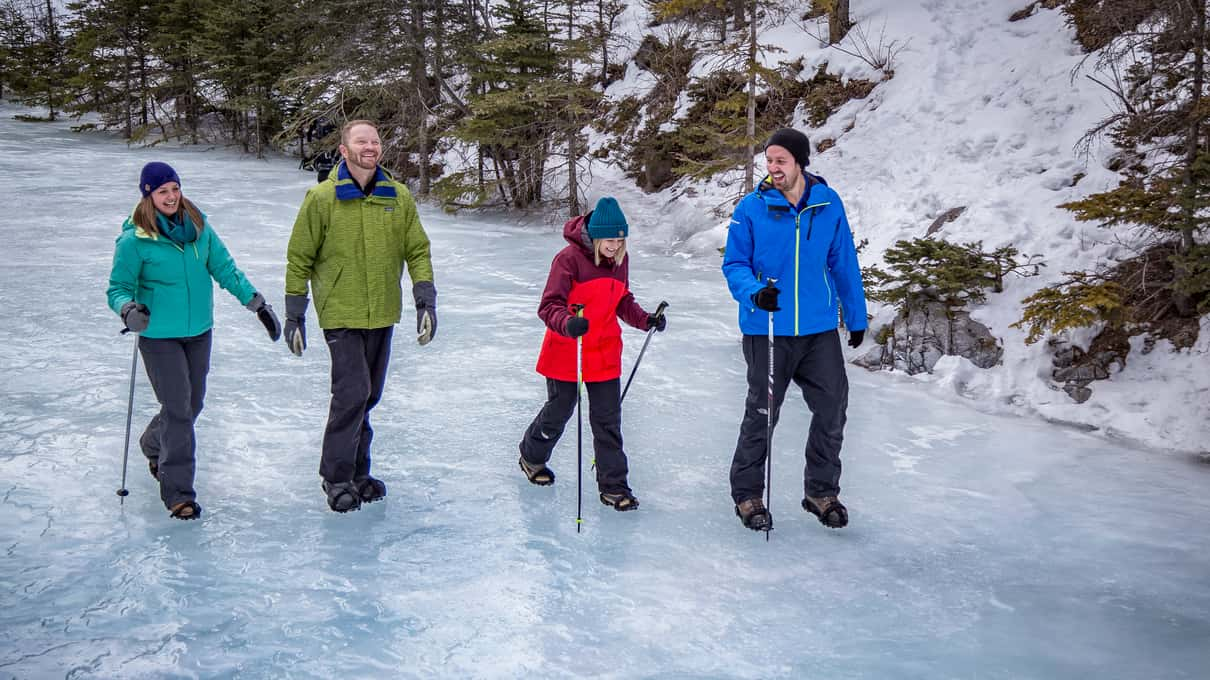
What the tours hand out
Discover Banff Tours from ~$78 gives every guest ice cleats and hiking poles, and serves hot chocolate with maple cookies at the falls. It expects you to arrive in thermal and snow clothing plus warm boots and a scarf.
The other three tours provide cleats as well. 1000HOST's ice walk from ~$106 lists them among its inclusions, and Canmore Raft Tours from ~$93 hands them out before its guided walk. Poles appear only on the Discover Banff listing.
None of the listings mention lending jackets or pants, and boots are not mentioned either. Plan to bring every piece of clothing yourself, and treat the cleats as the only gear you can count on receiving.
The Journey day from ~$70 adds the Grassi Lakes before the canyon, so you are out for 6–8 hours. Dress for the longer day with a spare warm layer, as the Grassi Lakes guide explains.
Cleats and poles plus hot chocolate included
Discover Banff Tours runs a 4-hour trip from Banff with about 2 hours of walking on the ice, from ~$78. Groups stay at 12 or fewer. GetYourGuide shows 5.0 from 20+ reviews and Viator 4.7 from 50+.
A small bag, not a big one
Discover Banff Tours asks guests not to bring luggage or large bags, and a small daypack is enough on any of the walks. Space in the minibus is limited, and you carry the pack on the ice.
Pack a thermos with a hot drink and a spare pair of gloves. The canyon has no café or shelter, and something warm at the falls makes the walk back far more pleasant.
Phone batteries drain fast in the cold. Keep the phone in an inside pocket close to your body, and carry a small power bank if you plan to take many photos.
Walking without a guide adds cleats and poles to your own list. The guide to walking Grotto Canyon alone covers that kit, and our page on children adds what small walkers need.
Too cold or too warm
Shivering that will not stop and clumsy, numb fingers are signs to tell the guide and warm up. On a short walk early action is easy, and the guide can slow the pace or lead you back sooner.
Overheating is the opposite trap. Sweat on the walk in turns cold at the falls, so open the jacket early and slow your pace instead of stripping layers off on the ice.
Leave a dry top in the vehicle for the ride home if you drive. The price comparison shows which tours include transport, and the directions guide covers the road from Banff or Calgary.